

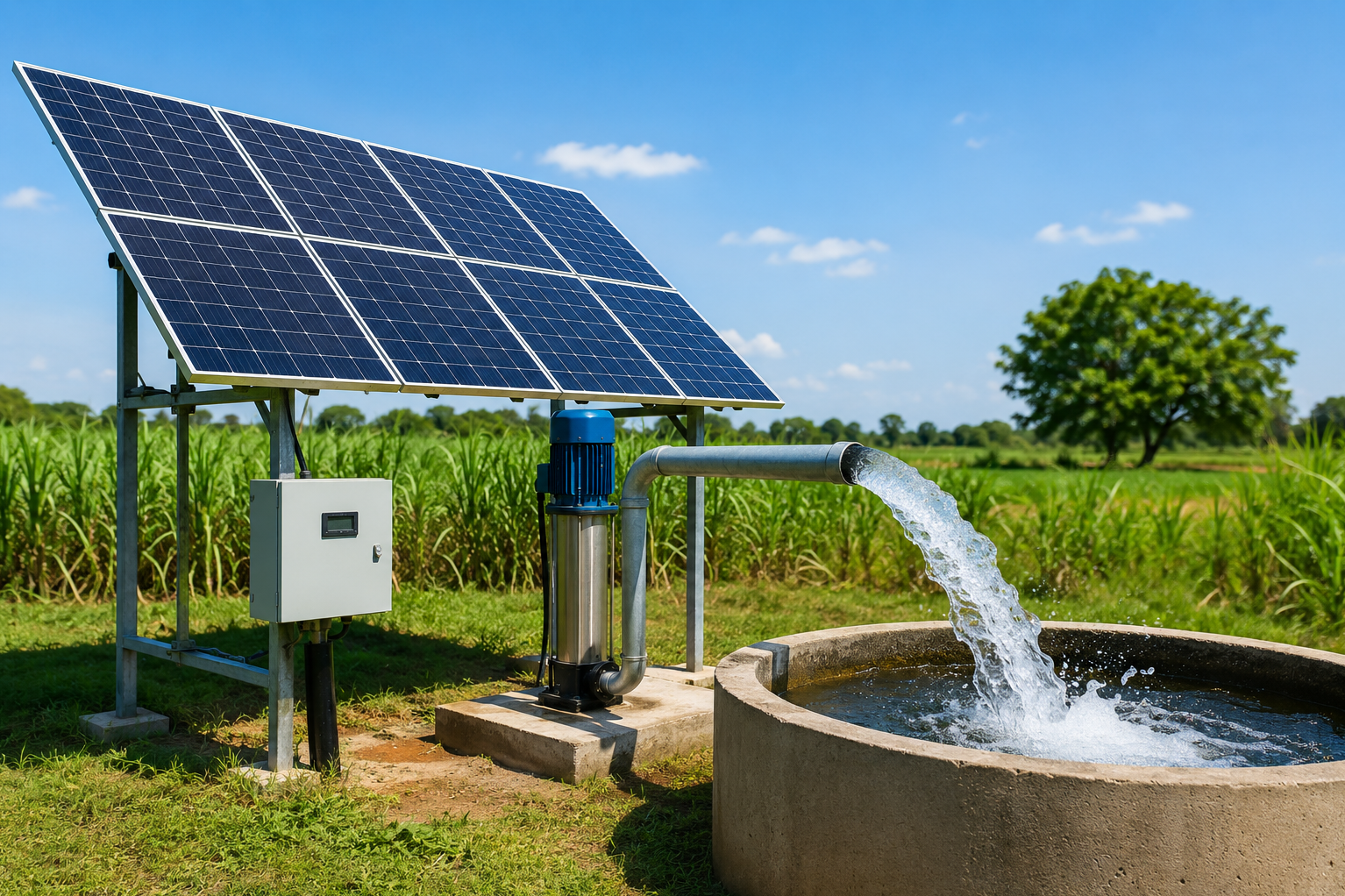
Solar water pumping can provide an alternative way to operate agricultural and water-transfer pumps using energy generated from sunlight. For farms and rural applications around Nagpur and across Maharashtra, these systems can be particularly relevant where daytime pumping is required or conventional electricity access presents practical limitations.
The correct pump and solar array, however, must be selected around the actual water requirement.
Start With Water, Not Solar Panel Capacity
A common mistake is beginning with a preferred solar capacity before calculating the pumping requirement.
The system should instead be designed around factors such as:
- Daily water requirement
- Borewell or water-source depth
- Static and dynamic water levels
- Total pumping head
- Pipe length
- Required discharge
- Irrigation method
- Number of pumping hours
These details determine the pump characteristics and the power required to operate it effectively.
How Does Solar Water Pumping Work?
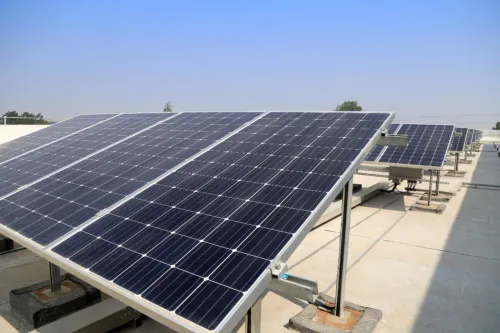
Solar photovoltaic modules generate electricity that powers the pump through a suitable controller or drive system.
Depending on the design, water may be pumped directly during available sunlight and stored in a tank or reservoir for later use. This can sometimes reduce the need for electrical battery storage because water itself becomes the stored resource.
Surface Pump or Submersible Pump?
The water source influences pump selection.
Surface pumps may suit applications where water is accessible near ground level, while submersible pumps are commonly used for borewells and deeper water sources.
Pump type should not be selected purely on motor horsepower. Head, discharge, efficiency, and water-source conditions are equally important.
Why Oversizing Can Be Wasteful
Installing excessive solar capacity or an unnecessarily large pump can increase project cost without improving the actual irrigation outcome.
At the same time, undersizing can result in inadequate discharge or insufficient operating hours.
Accurate field measurements are therefore valuable before equipment selection.
Consider Seasonal Conditions
Water availability and irrigation demand can change during the year.
Farmers should consider summer water levels, crop requirements, seasonal sunlight conditions, and future changes in cultivated area.
Where groundwater is involved, responsible water management remains important regardless of the energy source powering the pump.
Maintenance Requirements
Solar pumping systems generally have fewer fuel-related maintenance requirements than diesel-driven alternatives, but they are not maintenance-free.
Panels should be kept reasonably clean, mounting structures inspected, electrical connections checked, and pump performance monitored.
For agricultural customers around Nagpur, a solar water pumping system can be a useful application of renewable energy when it is designed from accurate water and site data.
Rather than purchasing a package solely by horsepower or panel count, farmers should look for a system in which the solar array, controller, pump, piping, and required water output are properly matched.