
Commercial solar projects can reduce dependence on purchased electricity and make productive use of large rooftops. But project performance depends heavily on decisions made before installation begins.
For factories, warehouses, hospitals, educational institutions, offices, and commercial properties in Nagpur, avoiding a few common planning mistakes can make solar investment evaluation much clearer.
1. Choosing Capacity Without Analysing Consumption
A large rooftop does not automatically mean the largest possible solar plant is the right choice.
Review historical electricity consumption and daytime load before deciding capacity. Planned machinery, building expansion, or operational changes should also be considered.
2. Comparing Quotations Only by Price per kW
Price per kW is convenient, but it does not reveal the complete project scope.
One quotation may include stronger mounting structures, additional protection, monitoring, approvals support, or higher-specification components while another may exclude them.
Compare scope and specifications line by line.
3. Ignoring Roof Condition
Commercial solar plants are expected to remain installed for years.
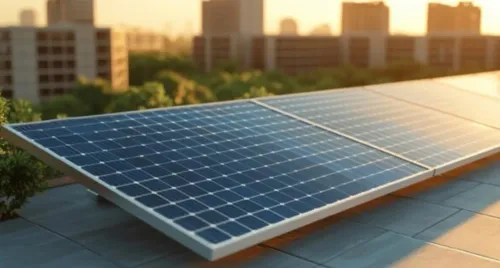
Before mounting equipment, check structural suitability, waterproofing conditions, roof age, drainage, and whether major repairs are likely to be required soon.
Removing and reinstalling panels for roof repairs can create avoidable cost.
4. Underestimating Shading
Industrial rooftops often contain water tanks, ventilation systems, ducts, chimneys, and other equipment.
Their shadows can move throughout the day and across seasons. Layout planning should account for these obstructions rather than simply filling every available square metre.
5. Treating Safety as an Add-On
Solar installations are electrical generating systems.
Earthing, lightning protection, isolation, cable routing, suitable protective devices, warning labels, and safe maintenance access should form part of the original project design.
6. Ignoring Monitoring
A solar plant may continue operating even when part of the system is underperforming.
Monitoring helps facility teams compare actual generation against expected patterns and identify unusual drops that may require inspection.
7. Selecting a Contractor Without Reviewing Execution Capability
A commercial project involves engineering, procurement, installation, electrical integration, testing, and commissioning.
Lgps Hybrid Energy undertakes solar energy projects in Nagpur. When evaluating the company or another solar EPC contractor, commercial customers should review technical scope, component specifications, engineering approach, project responsibilities, warranty documentation, and post-installation support.
A commercial solar installation should be evaluated as a long-term infrastructure project rather than a short-term equipment purchase.
Careful load analysis, engineering, roof assessment, safety planning, and transparent quotation comparison can prevent many of the issues that otherwise become visible only after the system has been commissioned.