
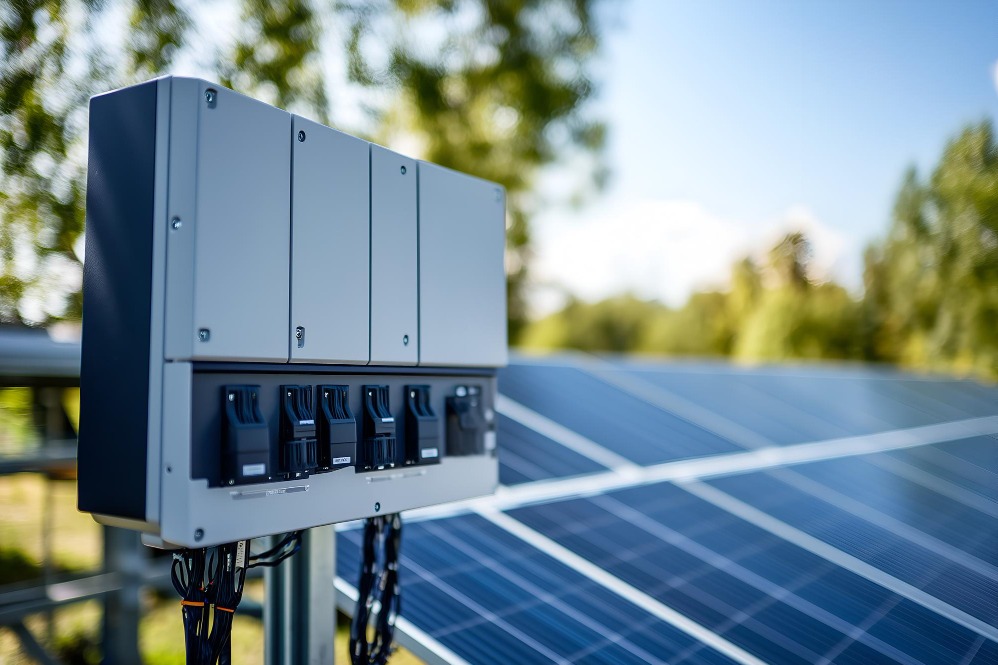
The solar inverter is one of the most important components of a photovoltaic system. While solar panels generate DC electricity, the inverter converts it into usable AC electricity and manages how energy moves through the system.
Choosing between an on-grid, hybrid, and off-grid solar inverter depends primarily on how you expect the system to operate.
On-Grid Solar Inverter
An on-grid inverter is designed for a solar system connected to the electricity distribution grid.
During sunny hours, the solar system supplies electricity according to the system configuration and available generation. When solar generation is lower than the property's requirement, electricity can be drawn from the grid.
On-grid systems are commonly considered where grid availability is reasonably dependable and the primary objective is reducing conventional electricity consumption.
One important point is that standard grid-tied systems generally shut down during a grid outage as a safety measure. Therefore, conventional on-grid solar should not automatically be considered a backup power solution.
Hybrid Solar Inverter
A hybrid inverter is designed to work with multiple energy sources, typically solar panels, grid electricity, and batteries.
It may be suitable for users who want both solar generation and energy storage. Depending on system design, stored energy can support selected loads during periods when solar generation is unavailable or grid supply is interrupted.
Hybrid systems require more planning because battery capacity, backup loads, charging behaviour, and inverter specifications need to work together.
Off-Grid Solar Inverter
Off-grid systems operate without depending on the utility grid and therefore normally rely on batteries for storing energy.
They can be relevant for farms, remote facilities, isolated properties, or applications where conventional electricity connectivity is unavailable or unreliable.
Because the system needs to support loads independently, accurate load calculations become particularly important.
Which Option Should You Consider?
The choice can be simplified around three questions:
- Is grid electricity consistently available?
- Do you need power backup during outages?
- How much are you prepared to invest in battery storage?
For many urban properties in Nagpur, an on-grid configuration may be evaluated when electricity savings are the main objective. Hybrid solutions become relevant where backup capability is also important, while off-grid systems serve more specialised requirements.
Do Not Select an Inverter by Capacity Alone
Capacity is only one specification.
Compatibility with solar modules, input voltage ranges, efficiency, protection features, monitoring, warranty support, installation conditions, and future expansion requirements also deserve attention.
Lgps Hybrid Energy works with solar energy solutions for different application requirements in Nagpur. Regardless of the supplier selected, consumers should ask for a system configuration based on their actual load profile rather than simply choosing equipment from a catalogue.
The right inverter is ultimately the one that matches how electricity is generated, consumed, stored, and backed up at the specific property.